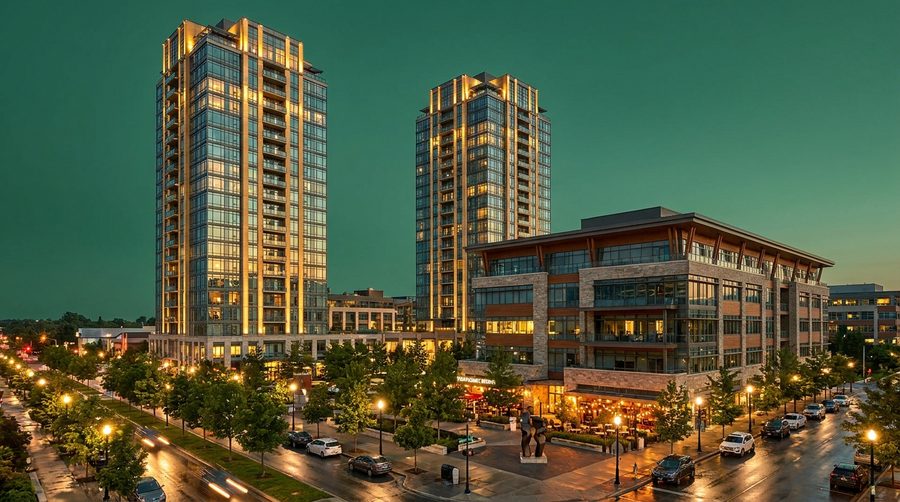
A boutique apartment in Villa Morra opens at $62,900. A Trinidad-corridor unit starts at $68,000, priced between $900 and $1,300 per square meter. Neither number assumes you walk into a bank. Most international buyers in Asunción never take a mortgage at all. They buy the way locals buy the pre-construction market: they put money down with the developer and pay the rest in instalments while the building goes up.
This is the part that surprises people who like the prices but assume they're locked out without financing. In Paraguay, the developer is the lender. The mechanism has a local name, en pozo (literally "in the pit," off-plan), and it's the default structure across the roughly 60+ towers currently under construction in the capital.
How en pozo actually works
The shape is consistent from project to project. You reserve a specific unit, put down a deposit, and pay the balance over the construction period. No lender sits in the middle.
Typical terms:
- Down payment: 10-30% of the price. The exact figure depends on the developer and how far along the project is. Earlier phases usually ask less.
- Balance in instalments during construction. Monthly or staged against build milestones. Because you're paying as the building rises, there's no lump sum waiting at the end for most structures.
- Delivery, for projects breaking ground now, is typically 2-3 years out. A unit you commit to today may hand over in 2028.
- Reservation deposits run $1,000-5,000. This holds your specific unit while the purchase contract is drawn up.
Prices are quoted and paid in US dollars. That matters for a foreign buyer: your payment schedule isn't exposed to guaraní swings over a three-year build.
Two concrete anchors. In the Trinidad corridor, entries start at $68,000 at $900-1,300/m², with 30% down and instalments running to roughly 2028. In Central Mariscal, Altius Group has units from $80,000 with delivery in 2026 — a shorter runway because the project is further along. The nearer the delivery date, the more you pay up front and the less runway you have to spread payments. Confirm the exact split in the developer's price list; the schedule varies by phase and unit.
Why developers finance buyers at all
It isn't generosity. Instalment income funds the construction itself — buyer payments are working capital that reduces how much the developer has to borrow or raise. It also widens the buyer pool. A $80,000 apartment that requires $80,000 in cash reaches a small audience. The same apartment at 20% down reaches a much larger one. The developer moves inventory faster and pre-sells the building before it's finished.
Local mortgages do exist, at roughly 8-12% interest. Most international buyers skip them anyway. The paperwork favors residents, the rates aren't compelling against instalment terms, and the whole appeal of the market is a low entry price you can stage over time. Financing through the developer keeps the transaction simple and dollar-denominated.
The trade you're actually making
Be clear-eyed about the exchange. Developer financing gives you a lower entry price and payments you can spread. In return, you carry construction and delivery risk. You're buying something that doesn't physically exist yet. If the building is late, you wait. If the developer fails, you have a problem — and that's the risk that matters most, covered in its own section below.
The returns are what pull buyers through that risk. Rental yields run 5-7% in the city and 7-12% in stronger investor districts. The sector grew 38.4% in 2024, and Paraguay's GDP expanded 6.6% in 2025. Buying pre-construction is how you enter at the bottom of that curve rather than paying finished-building prices.
How to underwrite the risk
You can't remove construction risk, but you can price it and reduce it. Three things do most of the work.
Track record. Has this developer delivered completed buildings before, on the terms they promised? A firm with handed-over projects behind it is a different bet than a first-time promoter. Ask, and ask for addresses.
Escribano verification. A Paraguayan escribano (notary) is central to any property transaction. Before you sign, have one verify the developer's legal registrations and confirm clean title to the land the tower sits on. This is not optional diligence — it's the step that separates a real project from a pitch.
Staged payments over big upfronts. The less you pay before the building physically exists, the less capital you have exposed if something goes wrong. Structure your instalments to track construction progress. Resist a schedule that front-loads your money.
Step-by-step: buying pre-construction without a bank
- Shortlist projects and pull the price lists. Compare entry price, price per square meter, down payment, and delivery date. The developer's price list is the source of truth for the payment schedule — confirm it there rather than assuming a standard.
- Vet the developer. Delivered track record first. Confirm the firm has handed over completed buildings on the terms it advertised.
- Reserve the unit. Pay the reservation deposit ($1,000-5,000) to hold your specific apartment while the contract is prepared.
- Engage an escribano. Have them verify the developer's registrations and the title to the land before you sign anything binding.
- Review and sign the purchase contract. It should specify the price in USD, the full payment schedule, the delivery date, and penalty clauses for late delivery or default.
- Pay the down payment and follow the instalment schedule through to delivery, keeping records of every payment against the contract.
Foreigners buy on a passport plus proof of funds — there's no residency requirement to own property. If you can't be in Asunción for the signing, the whole purchase can be done remotely through a power of attorney granted to a local representative.
Questions to ask the developer
- How many buildings have you delivered, and where can I see them?
- What is the down payment, and how is the balance scheduled — monthly, or by construction milestone?
- What is the contracted delivery date, and what happens if you miss it?
- Is the price fixed in USD for the full term, or subject to adjustment?
- Is the land title clean and registered, and can my escribano verify it?
- What penalty clauses protect me if the project stalls or is abandoned?
The honest risk: developer default
Everything else is manageable. This is the one that can cost you real money. If a developer runs out of capital, mismanages the build, or walks away, your instalments may be exposed and your unit may never be delivered. Late delivery is an inconvenience; default is a loss.
This is why the diligence above isn't paperwork for its own sake. A delivered track record is the single best signal that a developer will finish what they start. Escribano verification confirms the legal foundation is real. Staged payments limit how much you can lose if the worst happens. And penalty clauses in the contract give you recourse rather than a handshake. Underwrite the developer as hard as you underwrite the deal, because in pre-construction they are the deal.
FAQ
Do I need a mortgage to buy in Asunción? No. The standard structure is developer financing — 10-30% down and the balance in instalments during construction, with no bank involved. Local mortgages exist at 8-12%, but most international buyers skip them.
How long until I can use or rent the apartment? For projects breaking ground now, delivery is typically 2-3 years out. Projects that are further along, like some Central Mariscal units delivering in 2026, hand over sooner but ask for more up front.
Can I buy without traveling to Paraguay? Yes. You buy with a passport and proof of funds, and the entire purchase can be completed remotely through a power of attorney given to a local representative.
Guaravia curates Asunción pre-construction projects and the developers behind them so you can compare terms without guessing. Start with the free Paraguay Investment Guide at guaravia.pages.dev.