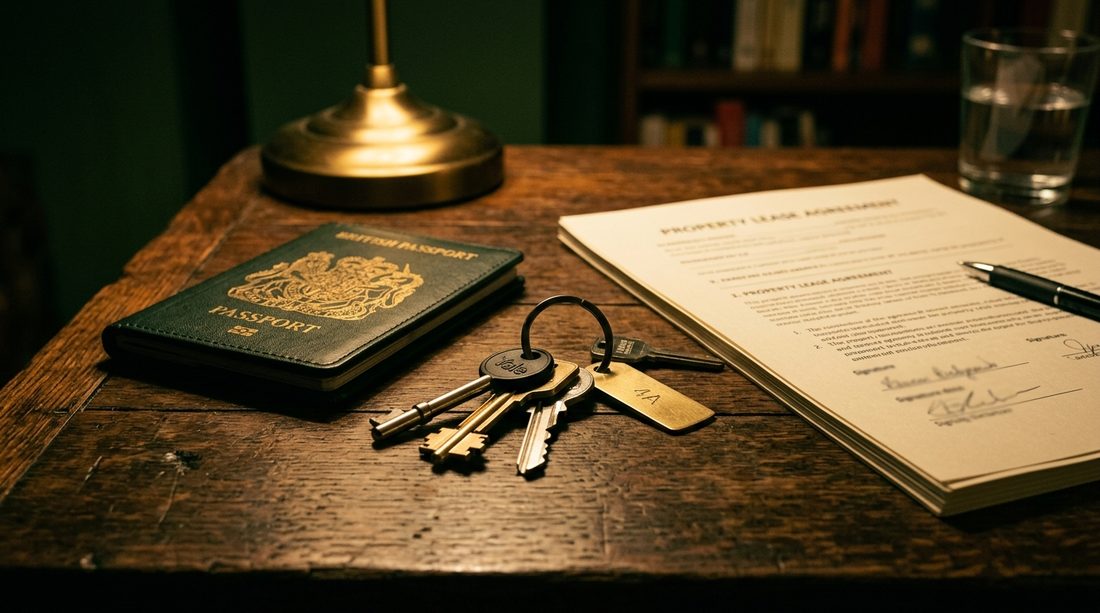
A Canadian retiree, a German fund manager, and an Argentine family fleeing peso inflation can all buy the same Asunción apartment on the same terms. No quota. No permit. No local partner. Paraguay is one of the few countries left where a foreigner's deed reads exactly like a citizen's.
That surprises people. Most of Latin America fences off coastlines or border zones, forces you into a trust, or caps how much land a non-national can hold. Paraguay does none of that. If you have a passport and clean funds, you can own freehold.
This is the bottom-line legal picture for anyone who has already decided they want in and now needs the facts straight.
The one rule that matters: equal rights
Under Paraguayan law, foreigners hold property on the same footing as nationals. Full freehold title. The right to rent it out, sell it, will it to your kids, or borrow against it.
There is no foreign-ownership quota. No minimum purchase price to qualify. No government permit for the transaction. You do not need to be a resident. You do not need to form a Paraguayan company. You buy as an individual, in your own name, with your passport.
What you actually need is short:
- A valid passport.
- Proof of funds (banks and notaries will ask where the money came from).
- A tax ID number, which your notary arranges as part of the process.
That's the entire foreigner-specific checklist. Everything else is the ordinary mechanics of buying real estate, which we'll walk through next.
What about the Investor Pass?
Since 28 April 2026, Paraguay runs an Investor Pass program: permanent residency in exchange for a qualifying investment. The thresholds are $70,000 into a productive project (via SUACE), $200,000 into real estate, or $150,000 into tourism.
Read that carefully, because it trips people up. Residency is a benefit you can pursue. It is not a requirement to buy. You can purchase a $62,900 apartment tomorrow and never apply for a visa. The Investor Pass is a separate door, useful if you want the residency, irrelevant if you just want the asset.
How the purchase actually works
The process is straightforward and, importantly, it protects the buyer at the step that matters most. Here is the sequence for a typical new-build purchase.
- Reserve the unit. A deposit of roughly $1,000–$5,000 takes the property off the market and locks the price while due diligence runs.
- Independent legal review. Your escribano (notary-lawyer) checks the title, the developer, and the paperwork before you sign anything binding. More on this below, because it's the step you never skip.
- Sign and pay the down payment. With the review clean, you sign the purchase agreement and put down 10–30% of the price.
- Pay in instalments during construction. For off-plan buys, developer financing usually spreads the balance across the build period.
- Escritura at delivery. When the unit is finished, the escritura pública (public deed) transfers title into your name and registers it in the public registry.
That's it. Reserve, review, sign, pay down, instalments, deed.
The escribano is not optional
In Paraguay the escribano is both notary and legal gatekeeper. Skipping this step to save a fee is the single most expensive mistake a foreign buyer can make.
A competent escribano confirms the seller actually owns the property and has the right to sell it. They check the title is free of liens, mortgages, unpaid taxes, or inheritance disputes. They verify the developer's permits and corporate standing. They make sure what's written in the contract matches what's recorded in the registry.
Hire your own. Not the seller's, not the developer's cousin. An independent escribano works for you, and their fee is trivial against the size of the transaction. This is the professional whose signature makes the deed real.
What it costs beyond the sticker price
Budget for closing costs on top of the purchase price. They are modest by international standards, but they exist.
The main ones are notary and transfer costs tied to the escritura, plus small municipal registration fees. Compared with the stamp duties and agent commissions layered onto a purchase in much of Europe or North America, Paraguay's transaction friction is light. For the exact percentages on your specific deal, confirm current figures with your escribano or developer, since they vary by property value and municipality.
Then there's the ongoing side, which is where Paraguay gets genuinely interesting.
Property tax runs roughly 0.3–1% — but of the fiscal value, not the market value. Fiscal value is typically a fraction of what you paid, so the real bill is small. A primary residence is largely exempt.
The wider tax regime backs this up. Income, corporate, and VAT are a flat 10%. The system is territorial, meaning foreign-sourced income isn't taxed in Paraguay at all. For someone earning abroad and holding an asset here, the annual carrying cost is low and predictable.
The numbers behind the interest
Entry prices are why buyers are looking at Asunción in the first place. A boutique unit in Villa Morra starts around $62,900. The emerging Trinidad corridor opens from $68,000, at roughly $900–1,300 per square meter. Premium districts run $1,200–1,800 per square meter.
Set that against the region. Comparable stock in Buenos Aires or Santiago sits at $3,000–5,000 per square meter. You are buying the same square footage for a third to a half of the neighboring-capital price.
Yields hold up too. Gross rental yields run 5–7% across the city and 7–12% in the stronger investor districts. Developer financing typically wants 10–30% down with instalments through construction. If you'd rather borrow, mortgages exist at 8–12%.
The macro backdrop is doing this no harm. GDP grew 6.6% in 2025 (World Bank). Moody's handed the country an investment-grade rating in 2025. The construction sector expanded 38.4% in 2024, and more than 60 towers are under construction in the capital. That's a market being built ahead of demand, not one coasting on a story.
Buying from abroad
You do not need to be in Paraguay to close. A power of attorney lets your escribano or a trusted representative sign on your behalf.
You grant the POA — usually notarized and apostilled in your home country — reserve the unit remotely, transfer funds through proper banking channels, and have the deed executed without booking a flight. Plenty of foreign buyers complete the entire purchase without setting foot on the property until handover.
A word of caution here. Remote buying raises the stakes on due diligence, because you're not there to eyeball the building or the paperwork. This is precisely when an independent escribano earns their fee. Use one, insist on the title review, and don't wire large sums against a reservation you haven't had checked.
The honest caveat
None of this is a reason to switch off your judgment.
Paraguay is a smaller, less liquid market than Buenos Aires or Mexico City. Selling quickly can take longer, and the pool of buyers is thinner. The rental yields are real, but so is vacancy risk if you buy in the wrong district or overpay for a glossy tower with sixty competitors down the street. Sixty-plus towers under construction is a strong signal of momentum and also a reminder that supply is arriving fast.
Local knowledge matters more than the low prices suggest. Contracts are in Spanish. Developer quality varies. The cheap entry point can lull a buyer into skipping the checks that protect them. Do the homework, hire independently, and treat the low friction as an advantage to use carefully, not a reason to move fast and hope.
FAQ
Do I need residency to buy property in Paraguay? No. Residency and ownership are separate. You can buy with a passport and proof of funds and never apply for a visa. The Investor Pass offers residency through investment, but it's optional, not a purchase requirement.
Can I buy a property in Paraguay without visiting? Yes. A power of attorney lets your escribano or representative reserve, sign, and register the deed on your behalf. Just tighten your due diligence, since you won't be there to inspect in person.
How much tax will I pay owning property in Paraguay? Property tax is roughly 0.3–1% of the fiscal value, which is well below market value, and a primary residence is largely exempt. The country's flat 10% territorial tax system means foreign income isn't taxed here. Confirm current figures with your escribano.
Want the full picture before you commit capital? Download the free Paraguay Investment Guide at guaravia.pages.dev for district-by-district pricing, developer checklists, and the closing process in detail. It's the reference we'd hand a friend who asked us the same questions.